


A Life: Ralph Bowie “Always Had a Gift for Music”

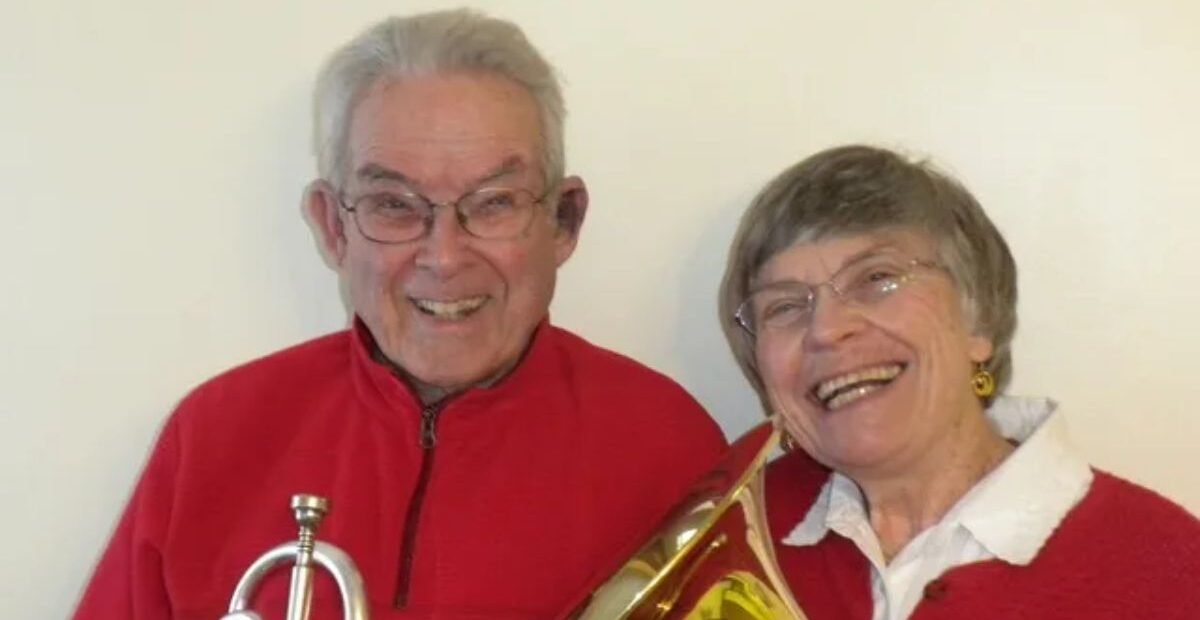
Ralph Bowie left a lasting mark on hundreds of students throughout his life as a musician, educator and longtime band director.
For many people, their musical memories began with Bowie introducing them to instruments in elementary school. Others remembered marching under his direction in the Lebanon High School band, taking private lessons later in life, or playing alongside him in community groups.
At this year’s Upper Valley Community Band spring concert, which was dedicated to Bowie, former student and fellow musician Sarah Chamberlain said he made music feel less like a subject to study and more like an adventure to enjoy and share.
A Long Career at Lebanon High School
Chamberlain first met Bowie in the early 1990s while playing clarinet at Lebanon High School, where Bowie served as music and band director from 1966 to 1996.
Years later, she reconnected with him after joining the Upper Valley Community Band, a volunteer ensemble of around 70 musicians. Bowie performed with the group on French horn and trumpet and also played with other local bands, including the Lyme Town Band and the South Royalton Town Band.
Chamberlain said Bowie believed nearly anyone could play music. He did not require perfection. Instead, he offered patience, encouragement and hands-on guidance, helping people correct mistakes without embarrassing them.
Family and Former Students Share Memories
Bowie died on May 5 from complications following an embolism. After his death, his wife, Donna Bowie, said many former students sent letters and online messages describing how deeply he had affected their lives.
Donna, who became Bowie’s second wife in 1979, said he had a natural gift for music and a lifelong love of teaching. His goal, she said, was always to help people rise to their best ability.
She remembered his smile and the way students often felt he saw potential in them before they saw it in themselves.
Early Musical Roots and Military Service
Bowie was born in Keene, New Hampshire, into a family where music was a central part of life. Both of his parents played instruments, and by age 6, Bowie was already learning the clarinet and trumpet.
Before reaching their teenage years, Bowie and his brother traveled by train to the Boston Conservatory of Music for lessons. Bowie later studied there for two years before being drafted into the Army, where he played with the 83rd Army Band in Germany.
After earning undergraduate and graduate degrees, Bowie taught in several New Hampshire communities, including Salem, Raymond and Candia, as well as Northwood Academy and Portsmouth High School, before beginning his long career in Lebanon.
A Demanding Teacher Who Inspired Pride
Bowie was known for being firm and holding students to high standards, but those who knew him said his expectations came with humor, warmth and encouragement.
Former student Tina Gove Kelbaka compared him to the original Mr. Holland from the film Mr. Holland’s Opus, describing him as a teacher who came to understand just how much he shaped his students’ lives.
His marching bands regularly had more than 100 students and included athletes, artists, scholars and shop students. The band became such a major part of local culture that crowds often came to football games as much for the halftime performance as for the game itself.
Kelbaka, a 1987 Lebanon graduate, said the stands would fill for halftime even during seasons when the football team was not especially strong.
Major Performances and Band Trips
Under Bowie’s direction, the Lebanon band performed at local parades, football games, festivals and competitions. He also organized fundraising for yearly trips to the Eastern States Exhibition in Massachusetts, where the band played on New Hampshire Day.
The band also performed in a Washington, D.C. parade honoring the military after Desert Storm, at Faneuil Hall in Boston and at the Cherry Blossom Festival Parade in Washington, D.C.
Only about 25 bands are accepted into the Cherry Blossom Festival Parade out of nearly 130 applicants nationwide. Lebanon was the only New Hampshire band selected in 1983, marking its third appearance in 15 years. The band also marched in 1972 and earned third place for its performance in 1969.
Bowie once noted that the Cherry Blossom event gave the band major exposure because roughly half a million people watched the parade.
Discipline, Standards and Life Lessons
Bowie expected his students to be prepared, on time, in step and properly dressed. Donna Bowie said if a uniform was not correct, a student did not march that day.
But former students said he never humiliated anyone. Kelbaka remembered that Bowie could become intense during rehearsals, but students understood that his passion came from how much he cared.
She recalled one August parking lot practice when Bowie became so frustrated that he told the students to go home. Instead, no one moved. The students wanted to fix the problem and keep practicing.
For Kelbaka and many others, being part of Bowie’s band was a source of deep pride.
Encouraging Students to Try Brass Instruments
Bowie’s son, Ed Bowie, who also played in the high school band and now lives in California, said his father had a special talent for inspiring both boys and girls to try brass instruments.
He would visit elementary schools with shiny trumpets and trombones, making the instruments exciting for young students. Ed remembered one year in the 1970s when the trombone section was led by four girls, and Bowie proudly placed them in the front row of the marching band.
Kelbaka also remembered Bowie encouraging her to choose the trumpet when she was in fourth grade at the former Seminary Hill School, even though she had been considering the flute or clarinet.
Supporting Students Beyond Music
Bowie’s care for students extended far beyond rehearsals and performances.
When Kelbaka’s cousin, Sherry Royce, was diagnosed with cancer at age 14, she was playing the baritone horn and wanted Kelbaka to learn the instrument so they could march together. Bowie continued to treat Royce as part of the band even when illness kept her from playing.
He invited her to the annual Cavalcade of Bands at Dartmouth, where high school bands from Vermont and New Hampshire gathered each fall. He also had the band play for Royce in the parking lot of the former Mary Hitchcock Hospital.
After Royce died at age 16, Bowie arranged for the band to play on the steps of Sacred Heart Church as her casket was carried inside.
Kelbaka said Bowie’s support during Royce’s cancer journey meant a great deal to the family, and he made sure she played her cousin’s baritone horn as Royce had wanted.
Life Outside the Band Room
Music was one of Bowie’s greatest passions, but it was not his only one. He loved the outdoors and enjoyed sailing off the coast of Maine with Donna, hiking the 48 4,000-foot peaks in the White Mountains with his children, camping, bicycling and traveling out west.
In addition to Ed, Bowie had a daughter, Laura, and two stepchildren.
Role in Reviving Lebanon Opera House
After the Lebanon Opera House closed as a movie theater in the 1960s, Bowie became one of the key people working to transform it into a performance venue. He was joined in that effort by Jack O’Connell.
Ed Bowie remembered watching 2001: A Space Odyssey there with his father, who was struck by the building’s excellent acoustics and believed it could become a wonderful place for live performances.
In Bowie’s own written account of the Opera House’s transformation from 1969 to 1994, he said he immediately saw the former movie house as a better performance space for the school band than the gym, as well as a promising home for musical theater.
Bowie persuaded the city manager to let the music department manage the space. With help from band members, the building was cleaned and the screen was removed in time for the 1969 Christmas concert. Bowie later wrote that the performance worked beautifully and that both the musicians and audience loved it.
A year later, the musical Oklahoma was staged there. Fundraising and volunteer expertise helped bring further improvements, and Ed remembered helping paint the interior as a seventh grader.
Continuing Music After Retirement
After retiring from teaching, Bowie remained active as a musician and instructor, even as he began dealing with heart problems in the late 1990s following his first stroke.
Bette Roberto, now a Lebanon resident in her 70s, had played music in high school in Massachusetts but lacked confidence when her husband and friends encouraged her to join the Upper Valley Community Band around 20 years ago.
In 2006, her husband gave her three trumpet lessons with Bowie as a gift. Roberto said Bowie was wonderful and supportive. When she finally joined the band, Bowie was there waiting for her.
Like so many students before her, Roberto said Bowie gave her encouragement when she needed it most.
Ralph Bowie’s life was defined by music, teaching, discipline and kindness. From Lebanon High School to the Upper Valley Community Band and the Lebanon Opera House, his influence reached far beyond the notes on a page. He helped students believe in themselves, built proud marching bands, revived performance spaces and gave generations of musicians memories they continue to cherish.